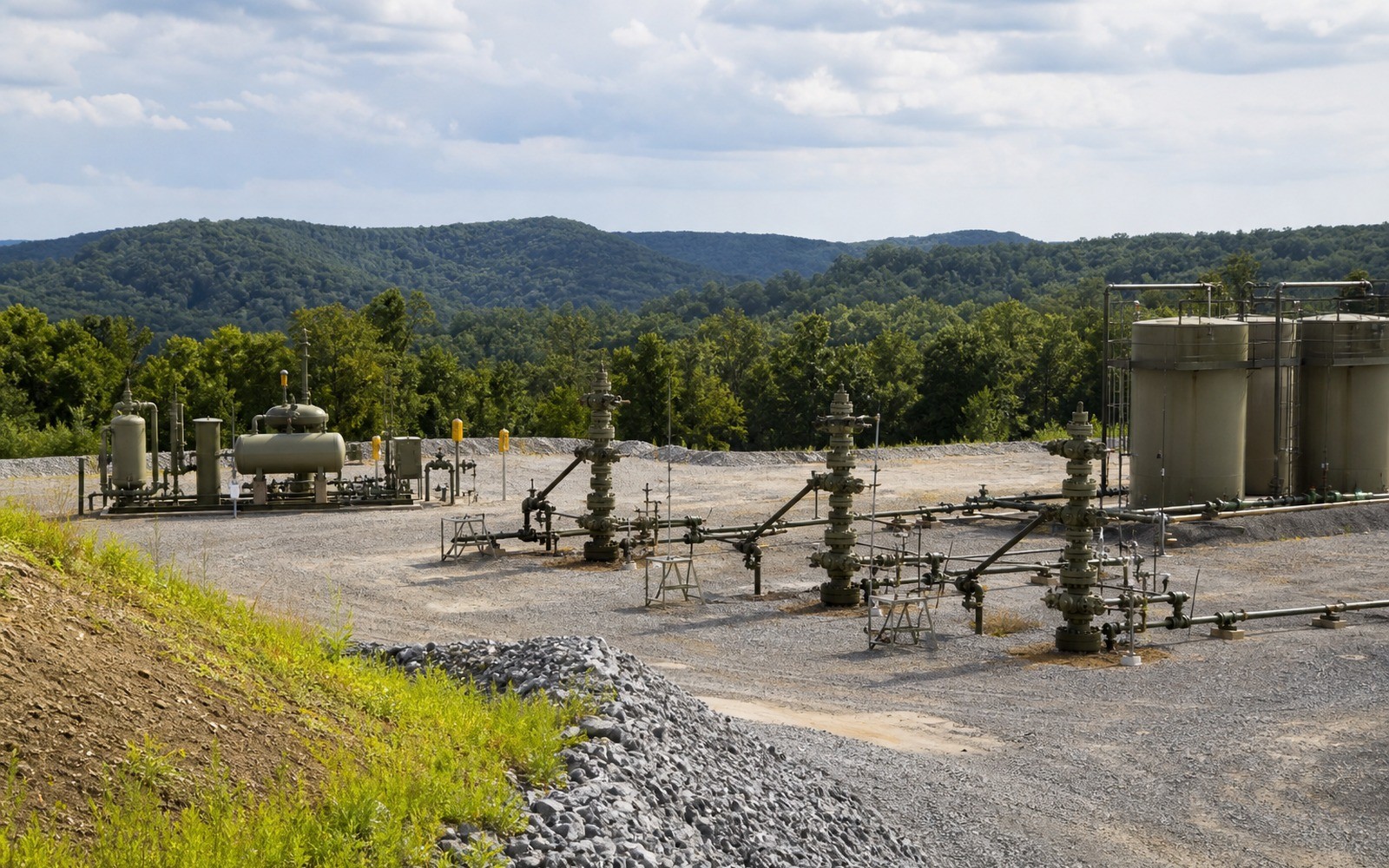
If your deed traces back to eastern Ohio, there's a good chance the operator interested in your acreage is chasing the Point Pleasant interval of the Utica Shale, not the shallower rock most Ohio families grew up hearing about.
The Utica Shale is a thick layer of organic-rich rock that sits several thousand feet below much of eastern Ohio. For years it was known mostly as a source rock for older, shallower wells drilled into formations above it. Everything changed roughly a decade and a half ago when operators figured out how to drill long horizontal wells and hydraulically fracture the lowest few hundred feet of the Utica, a zone geologists call the Point Pleasant. That interval turned out to be the real prize: better porosity, better natural fracturing, and enough pressure to make horizontal wells economic across a band of counties running from the Ohio River northwest into the middle of the state.
If you own minerals in that band, the terms 'Utica' and 'Point Pleasant' will show up interchangeably in leases, division orders, and unsolicited purchase offers. Knowing what the play actually looks like underneath your land helps you read those documents instead of just trusting whatever number is printed on them.
Where the play actually sits
The commercially productive core of the Utica/Point Pleasant runs through Belmont, Monroe, Guernsey, Noble, Harrison, Carroll, Columbiana, and Jefferson counties, with meaningful activity extending into Muskingum and Tuscarawas. Belmont and Monroe counties, along the Ohio River, have historically carried some of the strongest well results in the play because the rock there sits at depths and pressures that favor high initial production. Move west or north out of that core and wells generally get thinner and less predictable, though operators still hold and periodically develop acreage across a wider footprint than the core counties alone.
Depth matters more here than in a lot of shale plays. In the eastern counties the Point Pleasant can sit 7,000 to 9,000 feet down, which is expensive to drill but tends to come with higher pressure and richer gas or liquids content. As you move away from the river the target gets shallower and the economics shift, sometimes toward dry gas instead of the oil and natural gas liquids that make wells near the core especially valuable to operators.
Who has been drilling it
Encino Energy, which bought up a large block of former Chesapeake Energy acreage, now operates a substantial share of Utica wells in Belmont, Monroe, and Noble counties. Ascent Resources has been one of the most active drillers in Carroll, Harrison, and Guernsey counties, running some of the largest well pads in the state. Gulfport Energy holds significant Utica acreage in Belmont and Harrison counties as well. Smaller players and legacy operators round out the rest, and ownership of a given unit can change hands through mergers even after your lease is signed, which is why the name on your royalty check may not match the name on your original lease.
Because these are large horizontal programs, a single well is usually drilled to drain a 'unit' assembled from dozens of adjoining tracts, often combining small heirship interests with larger single-owner parcels. Your royalty share on a given well is proportional to your net mineral acreage inside that unit, not to how the well happens to be positioned on the surface.
The Dormant Mineral Act shadow over Utica acreage
Because so much of the Utica core sits under land where minerals were severed from the surface decades ago, Ohio's Dormant Mineral Act comes up constantly in this play. Under the statute, a severed mineral interest can be deemed abandoned back to the surface owner if it goes twenty years without a 'savings event': production, a filed claim to preserve, a recorded lease, or certain other documented uses. A lot of old Utica-area severances trace back to coal or gas transactions from the mid-1900s, long before horizontal drilling made the Point Pleasant valuable, and many of those chains were never touched again until a landman showed up decades later.
That history means title in this play is unusually contested compared to newer shale basins. Owners sometimes discover a dormant-mineral claim has been filed against their interest, or find gaps and competing claims when they try to sell. It is one of the reasons a courthouse title check in the county recorder's office matters more here than in almost any other Ohio play before you sign anything or accept an offer.
What determines value in this play
Buyers pricing Utica/Point Pleasant minerals look at a handful of concrete factors: whether your tract is already held by production or leased-but-undrilled, how close the nearest producing lateral runs to your acreage, what the decline curve on nearby wells looks like after the first year or two, and whether the unit is oil-rich, liquids-rich, or dry gas. A producing tract with a strong first 12-18 months of royalty history behind it is priced very differently than raw, unleased acreage in a flank county with no offset wells nearby.
Prices for Utica minerals move with commodity prices and rig activity, so any number quoted to you should be described as a range tied to current conditions rather than a fixed promise. Anyone offering a flat guaranteed figure without asking about your unit, your royalty history, and your county position is skipping the steps that actually set value in this play.