
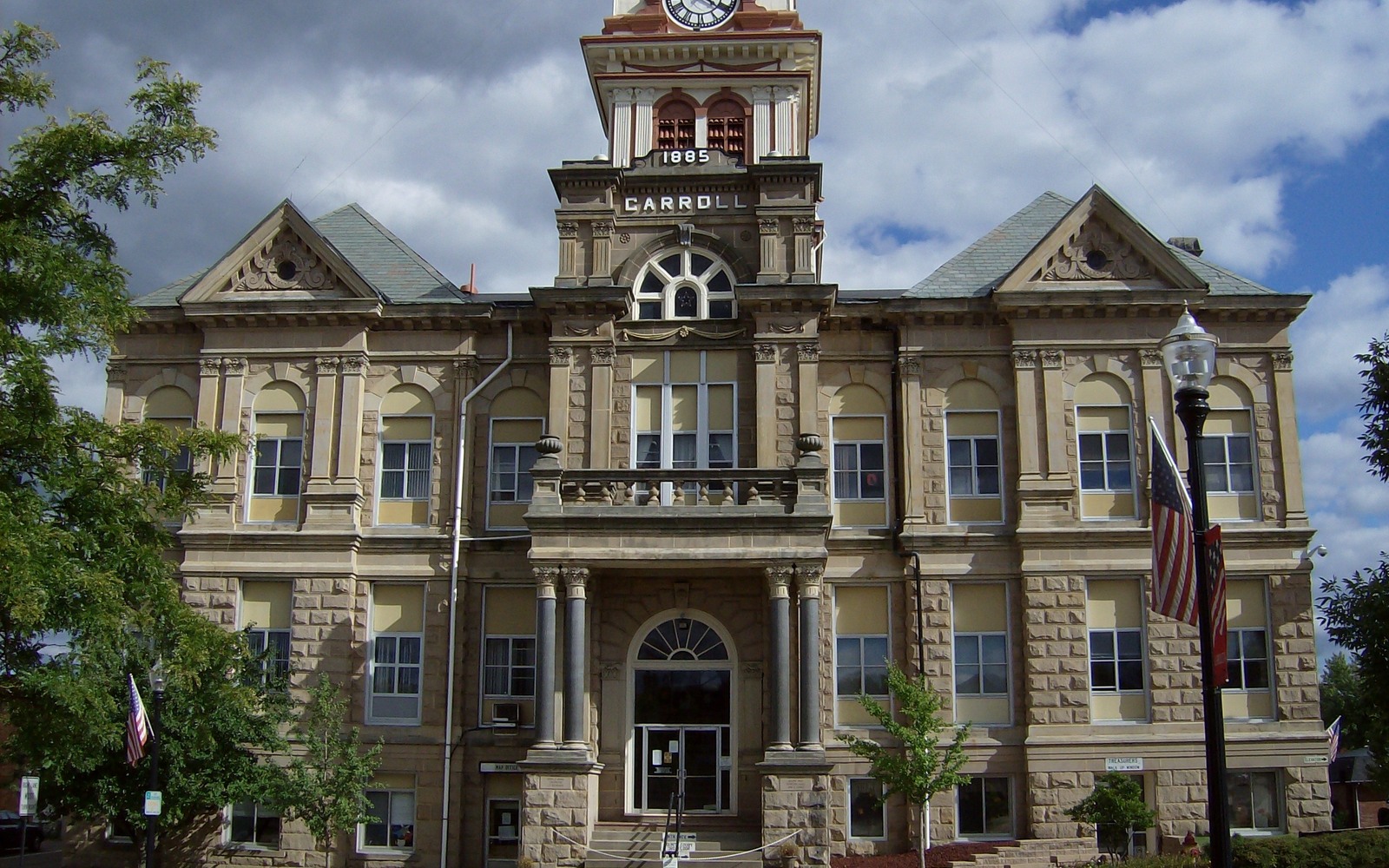
Is it true Ohio's first Utica shale well was drilled in Carroll County?
Yes, the first commercial Utica well in the state was drilled here in 2011, giving Carroll County some of the longest production histories anywhere in the play.
Carroll County holds a specific place in Ohio's oil and gas history: the state's first commercial Utica shale well was drilled here in 2011, and the county has been at the center of the play ever since.
If you own mineral rights in Carroll County, you're holding an interest in the ground where Ohio's modern shale era actually started. That first well, drilled by Chesapeake in a rural township not far from Carrollton, kicked off more than a decade of sustained horizontal development across the county, which means Carroll County tracts often carry longer, more complete production histories than acreage almost anywhere else in the state.
The Carroll County Recorder's office in Carrollton holds the deed, lease, and division order record for all of this, and it's the starting point whether your family's minerals have been producing steadily for years or have sat quiet through several ownership changes.
Because development started here first, many Carroll County wells are now well over a decade into their production life, meaning they've moved past the steep initial decline that's typical of shale wells in their first year or two and settled into a longer, shallower production tail. If your family's minerals have been producing this whole time, your royalty statements likely show that full arc, which is genuinely useful information when weighing a lump-sum offer against continuing to hold the interest.
That said, not every tract in the county is on an old, established unit. Newer wells continue to be drilled as operators refresh existing units or step out into previously undeveloped acreage, so Carroll County still sees a mix of decade-plus producers and comparatively recent development, and where your specific tract falls on that spectrum matters for how it's valued.
Carroll County isn't purely agricultural. Areas near Atwood Lake, including around Dellroy, have a mix of working farmland and recreational, lake-adjacent development, and parcels in platted lake communities sometimes have mineral rights reserved to an original developer rather than passed along with the surface lot. If your property is part of a subdivision or plat near the lake, it's worth confirming through the county recorder whether minerals actually transferred to you before assuming standard ownership.
Away from the lake, most of the county's mineral estate sits under working farmland that's stayed in the same families for generations, which means fractional, heir-held interests are the norm rather than the exception. A single original tract can now be split among a dozen or more descendants, each holding a small but individually sellable share.
For a producing tract, your division order's decimal interest and recent royalty statements are the clearest measure of value, they show your exact share of a specific well's real, recorded production rather than a countywide estimate. Where your well sits on its production curve, early, mid-decline, or into its long tail, shapes how future production is weighed against a lump-sum offer today.
For unleased or undeveloped acreage, an offer is built from comparable activity in the surrounding townships. Given how extensively Carroll County has been developed, this comparable data is usually rich enough to support a fair, well-grounded offer even without an existing lease on your specific tract.
Title cleanliness matters just as much as production history. A tract with unresolved estate issues, missing heirs, or an old, unreleased lease still sitting on the record needs those addressed before a sale can close, and flagging any of that early keeps the process moving smoothly.
Carroll County's oil and gas activity predates the Utica boom by decades in some townships, which means it's not unusual to find an old shallow-well lease or severance sitting in a tract's history alongside more recent Utica activity. If a family's interest has genuinely sat unused, no lease, no production, no recorded claim to preserve, for a continuous 20-year window, Ohio's Dormant Mineral Act, ORC 5301.56, gives the surface owner grounds to pursue reclaiming it through a formal notice and abandonment process.
Checking the recorder's index in Carrollton for any abandonment notice against your family's legal description is a reasonable step before assuming an older, quieter interest is still fully intact. Any evidence of activity within the past 20 years, an old lease, a royalty payment, a recorded claim to preserve, generally defeats a dormancy claim outright.
Questions Ohio owners ask
Yes, the first commercial Utica well in the state was drilled here in 2011, giving Carroll County some of the longest production histories anywhere in the play.
Not necessarily. Wells settle into a longer, shallower production tail after the initial decline, and that tail still represents real, often more predictable, value.
It depends on the original plat and deed language. Some lake-area developments reserved minerals separately from the surface lots, so this needs to be confirmed through a title search.
They can still be sold. Given how extensively the county has been developed, an offer on unleased acreage can be built from strong comparable activity in the surrounding townships.
Search the Carroll County Recorder's index for any abandonment notice filed against your legal description, and gather evidence of any activity, a lease, production, or a preserved claim, within the last 20 years.
Keep reading before you sign
Own severed minerals under Cambridge, Byesville or Old Washington? Learn what Guernsey County's Utica Core position means for a sale and get a no-pressure offer.
Noble County sits in Ohio's Utica/Point Pleasant core near Caldwell. Learn how top-tier wells, split estates, and dormant mineral law affect a sale here.
Own oil and gas mineral rights in Tuscarawas County, Ohio? Learn how the Utica flank play, county records, and the Dormant Mineral Act shape your options.
Put your county record in front of a buyer
Share the Ohio county, owner name, interest type, producing status, available statements, and the decision that needs a clearer answer.