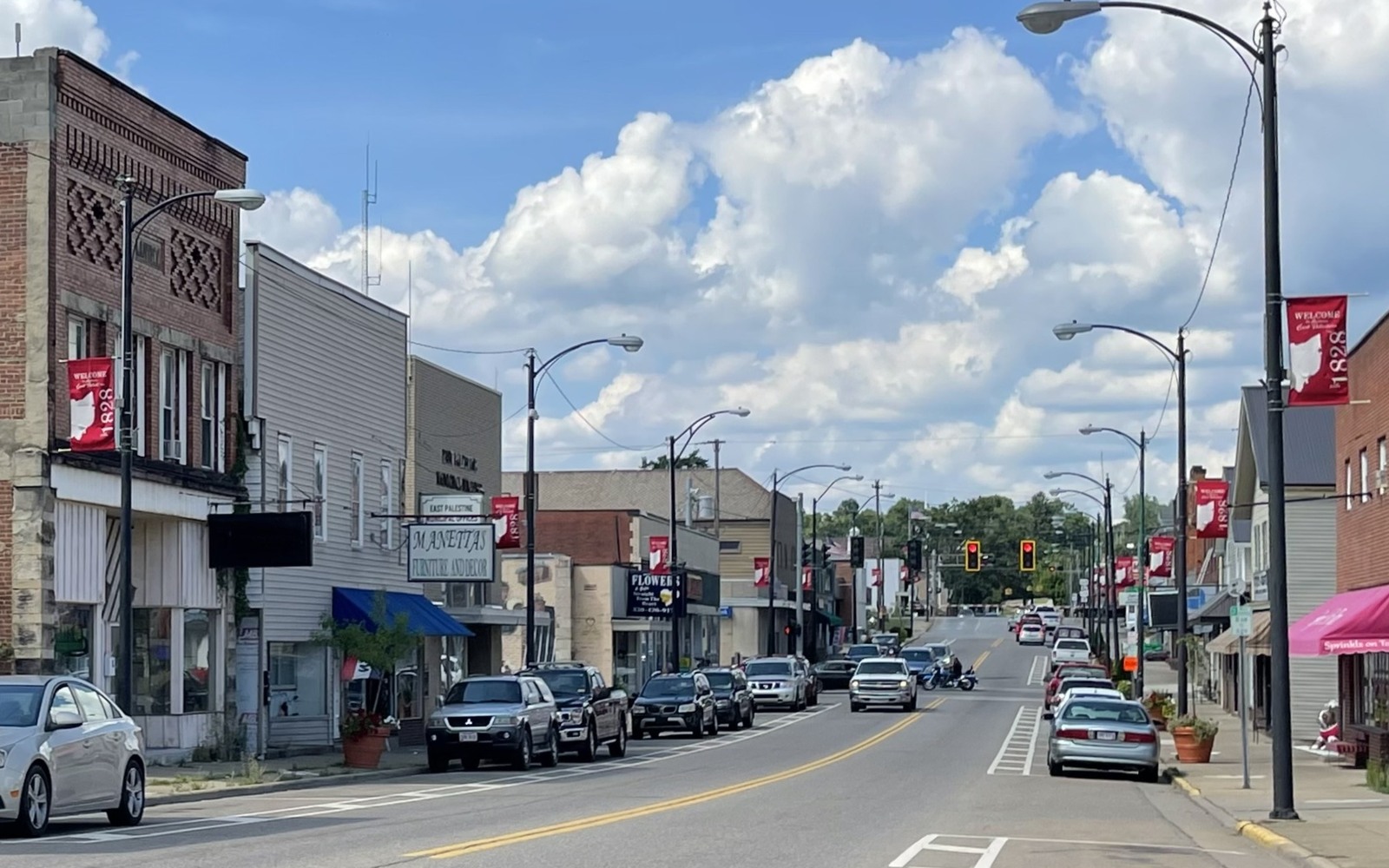
East Palestine sits right at Ohio's eastern edge, close enough to Pennsylvania that some families here hold mineral interests that cross into both states' record systems.
East Palestine is a small city in eastern Columbiana County, close to the Pennsylvania border, in an area whose economy historically centered on farming and small manufacturing rather than oil and gas. Columbiana County sits on the flank of the Utica/Point Pleasant fairway, and development around East Palestine specifically has been limited compared to core counties further south, though mineral ownership here is no less real for families who've held farmland for generations.
Flank-edge geology near the state line
Being at the far eastern edge of Columbiana County, tracts around East Palestine sit toward the outer boundary of the Utica play's productive area. That doesn't rule out future development, but it does mean current value depends heavily on lease status and nearby comparable activity rather than existing local production, since drilling here has been sparse.
Confirming which state's records actually govern your minerals
If your property or your family's original land holding straddled the state line at any point, it's worth double-checking that your specific parcel is recorded in Ohio, since Ohio mineral law, including the Dormant Mineral Act, only applies to interests recorded here. The Columbiana County Recorder's office in Lisbon is the correct starting point for any Ohio-side title search.
Begin with the local record trail
A mineral review in the county starts with the county recorder, legal description, deed chain, reservations, affidavits, notices, lease, units, division orders, payor records, statements, and Ohio well data.
Route Ohio title questions correctly
Probate, marital property, dormant-mineral procedure, pooling, recording, transfer, regulatory filings, and payor notices can change the file in the county. Qualified advisers should review legal and tax questions.
Keep the local review tract-specific
Use local context as a prompt, not a valuation shortcut. The county mineral docket then reconciles the exact tract against gross and net acres, ownership fraction, recorded notices, producing and inactive wells, paid decimal, recent statements, lease burdens, title exceptions, and the complete written offer.