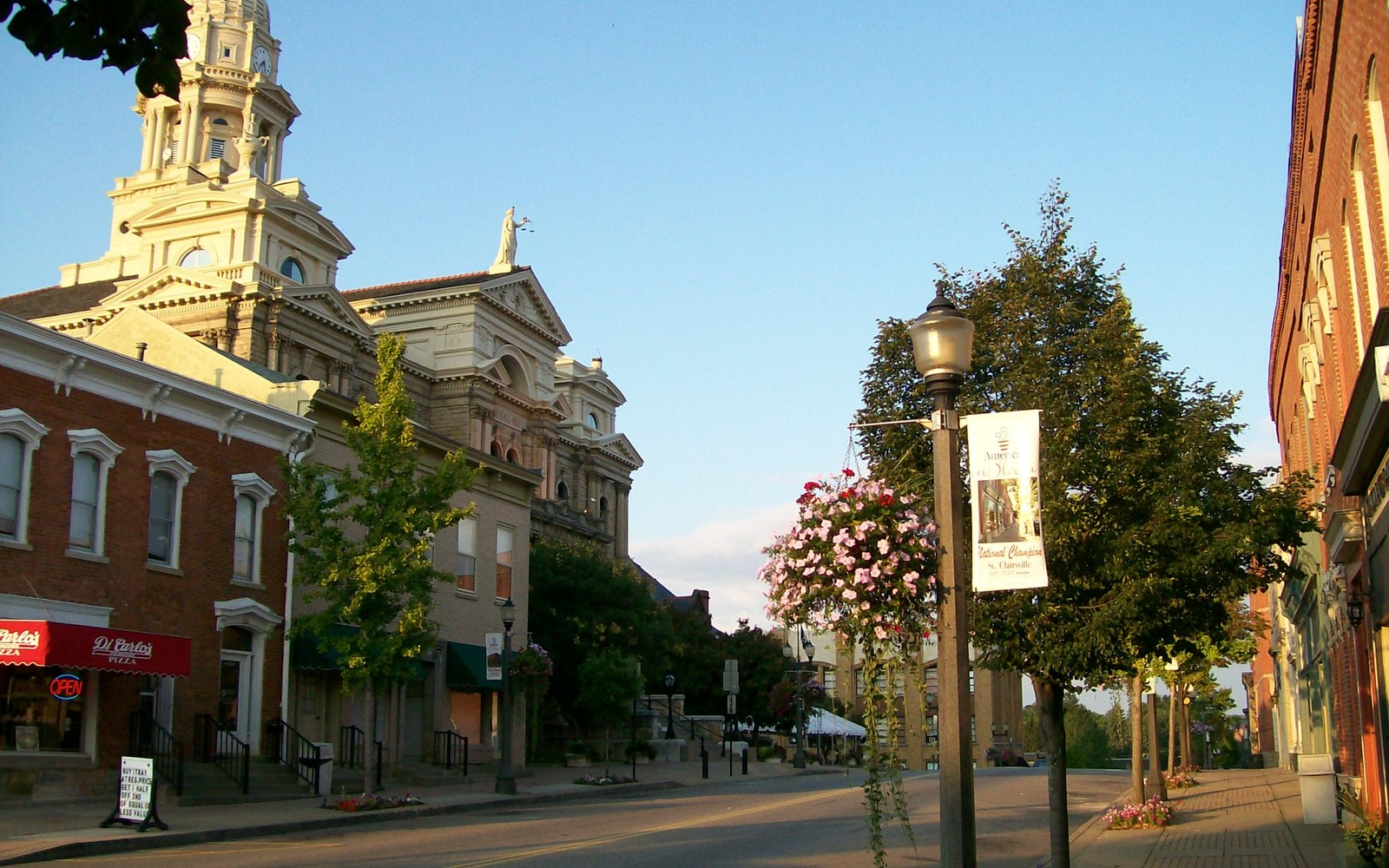
As the Belmont County seat, St. Clairsville is where the paper trail for nearly every mineral interest in the county physically lives, in the recorder's office just off the courthouse square.
St. Clairsville anchors Belmont County, one of the deepest parts of the Utica/Point Pleasant core and home to over a decade of sustained horizontal drilling. Whether your mineral interest sits in town or out in the surrounding townships, the Belmont County Recorder's office here holds the deed, lease, and any Dormant Mineral Act filings that define what you actually own.
Because St. Clairsville is the county seat, we often start title work for Belmont County parcels right here, regardless of exactly where the land itself sits.
What the county records show
A search of the grantor-grantee index traces your interest back to its original severance or acquisition, and shows any leases or affidavits recorded since. For interests near St. Clairsville that have changed hands through inheritance, this search also confirms whether the estate transfer was properly recorded.
If a prior generation's estate was never formally probated or recorded against the mineral interest, that gap needs to be resolved before a sale can close cleanly, and we identify it early rather than after an offer is made.
Belmont County's Utica core position
Belmont County has drawn sustained multi-well pad development for over a decade, supported by significant midstream infrastructure built to move gas and liquids out of the area. That level of investment reflects continued operator confidence in the county's long-term production.
Parcels near St. Clairsville that fall within active units carry real production data, while unleased acreage nearby still benefits from proximity to that ongoing activity.
Selling through the county seat process
Once title is confirmed at the recorder's office, we prepare a deed for your review and coordinate signing, often through a local notary near St. Clairsville if that is more convenient for you.
Because so much title and lease documentation for Belmont County runs through this office, sales tied to the St. Clairsville area often move efficiently once the initial title search is complete.
Begin with the local record trail
A mineral review in the county starts with the county recorder, legal description, deed chain, reservations, affidavits, notices, lease, units, division orders, payor records, statements, and Ohio well data.
Route Ohio title questions correctly
Probate, marital property, dormant-mineral procedure, pooling, recording, transfer, regulatory filings, and payor notices can change the file in the county. Qualified advisers should review legal and tax questions.
Keep the local review tract-specific
Use local context as a prompt, not a valuation shortcut. The county mineral docket then reconciles the exact tract against gross and net acres, ownership fraction, recorded notices, producing and inactive wells, paid decimal, recent statements, lease burdens, title exceptions, and the complete written offer.